
Most integrators don’t fail because of bad software. They fail because their processes look like a wiring closet after a tornado. Jason Sayen, President of consulting firm IAmSayen, says it plainly, software “doesn’t fix broken processes, it amplifies them.” And when business grows fast, the cracks widen.
“If selling more puts a burden on your operations, that’s the telltale sign your processes aren’t right,” he noted during a recent episode the D-Tools “What’s the Buzz” podcast.
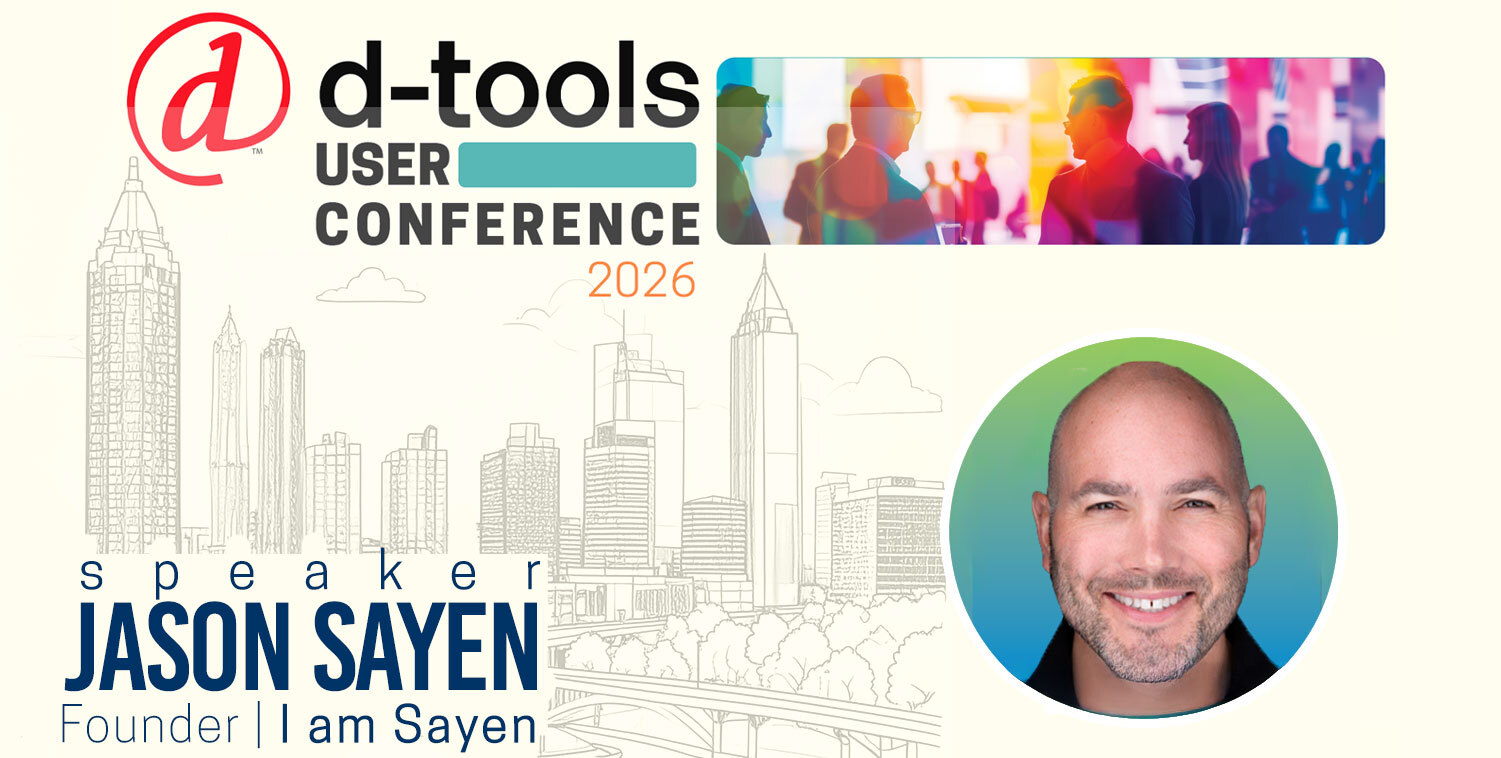
On Wednesday, February 25 at the 2026 D-Tools User Conference at the Renaissance Atlanta Midtown, Sayen will lay out a blueprint for integrators who want to stop fighting fires and start running a real system. His 9:15 am morning session, entitled “Process Before Software: Building Operational Clarity for Successful Implementation,” will draw upon Sayen’s more than 30 years of experience helping companies define workflows, visualize operations, and turn tribal knowledge into something the whole team can follow. His specialty is simple: make the invisible visible.
The Hidden Bottlenecks Everyone Has
Ask Sayen what he finds inside most integration firms and he won’t hesitate.
“It’s almost always the same one… that handoff from sales to production,” he notes.
Deals close, deposits hit, techs get dispatched, and then the guesswork begins. One day wasted on-site trying to decode a project might not sound like much, but when multiplied across jobs it becomes a mess of change orders, missed steps and frustrated clients.
“If selling more puts a burden on your operations, that’s the telltale sign your processes aren’t right. - Jason Sayen, IAmSayen
Sayen says the first line of defense is having a structured project kickoff and a clear transition from sales to operations. Without it, teams improvise. And improv turns into rework.
Then there’s the change-order chaos.
“It’s always not defined and a gigantic mess. Nobody owns it,” he comments. And finally, the new pain point: transitioning from project completion to service. With the industry shifting toward recurring service plans, firms can’t survive on the old “call me anytime” model. As Sayen puts it, “If it’s not defined, of course they’re going to keep calling you for work.”
Seeing the Business from 10,000 Feet
Sayen’s signature tool is the G.U.I.D.E. framework, built to give integrators a clear, honest view of how work actually moves through the company from the first spark of marketing to long-term service.
A client once told him, “I need you to capture what’s in my head about how the project flows… in a visual format.”
That comment became the seed for what Sayen now calls the client journey, a high-level map that exposes knowledge gaps, software gaps, and responsibility gaps. Once a company sees the truth on paper, denial is no longer an option.
This isn’t theory. Sayen has worked one-on-one with nearly 100 integrators worldwide. Half already sell service plans. The other half want to. They just don’t know how to structure them yet. That clarity of turning what people assume into what people can follow is what makes software implementation finally stick.
Fixing Your Processes to Better Align with D-Tools
D-Tools software can automate, streamline, and keep teams aligned, but only if the underlying process is solid. Sayen’s sessions connect the dots between intention and execution. The real value is helping companies understand what needs fixing before asking any software to fix it.
As he says, you must stop asking “what does it do?” and instead ask “how does it fit how we work?” Otherwise, you’re buying horsepower you can’t steer.
Even great hires fall flat without structure. Sayen sees it everywhere. You bring in a project manager with 20 years of experience, then six months later you’re asking, “Why are you doing it that way?” The answer is simple. “You never showed them.”
He breaks it down to two buckets:
• Skills training – what they need to do the job
• Job training – how your company expects the job to be done
Visual workflows make onboarding real. They give new hires the lay of the land before they pick up bad habits. Companies that use this approach even schedule 30- 60- and 90-day check-ins from day one. As Sayen puts it, “You never find the time, you have to make the time.”
Key Session Takeaways from D-Tools User Conference
If you want D-Tools software to work effectively, you need process clarity. Sayen’s session at the upcoming D-Tools User Conference in Atlanta will show you how to find bottlenecks, map your workflow, document the way you actually operate, and build a foundation strong enough for your team, your tools, and your growth.
Integrators who attend will walk away with practical frameworks, templates, and a clear path to align their team and make D-Tools a force multiplier instead of another task to manage.
If your business has ever felt too busy, too reactive, or too dependent on what’s “in someone’s head,” this is your chance to fix it. The work starts with understanding how your company truly runs. This session will show you the way.
